Daytime or evening render: which view do you need?
Choose daylight and evening interior renders according to the question you want to answer, and keep assumptions about lighting explicit.
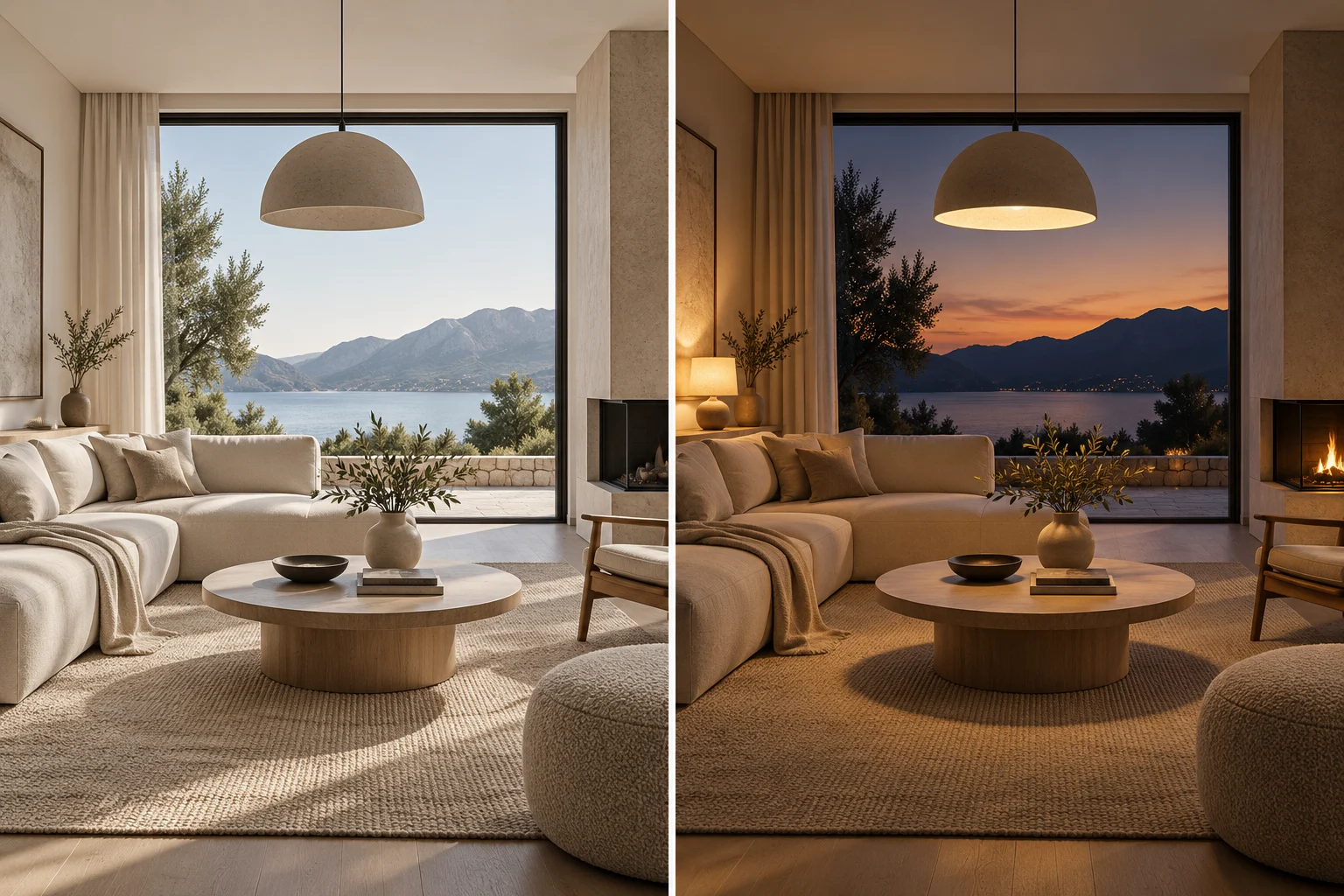
Daytime and evening images tell different stories about the same room. Choose the lighting scenario according to the presentation goal, not simply because one looks more dramatic.
Use daylight to explain the space
A daylight view can make room connections and material combinations easier to read. Supply window positions and available orientation information. If the image uses an illustrative sky or approximate sun position, keep that distinction clear: it is not a verified daylight study.
Use evening views for atmosphere
An evening scene can show the intended relationship between pendants, task lights and accent lighting. Identify which fittings are specified and which are placeholders. A pleasing visual balance does not establish measured illumination or electrical design.
Keep a comparison controlled
When comparing lighting moods, retain the same camera, furniture and finishes. Otherwise, a different composition may influence the preference more than the light. For a limited image set, prioritize the scenario that answers the main question and request the other as an optional view in the proposal.