Landscaping in exterior renders: show the right stage
Specify proposed planting, terraces and outdoor furniture without allowing mature vegetation or decorative elements to misrepresent the project.
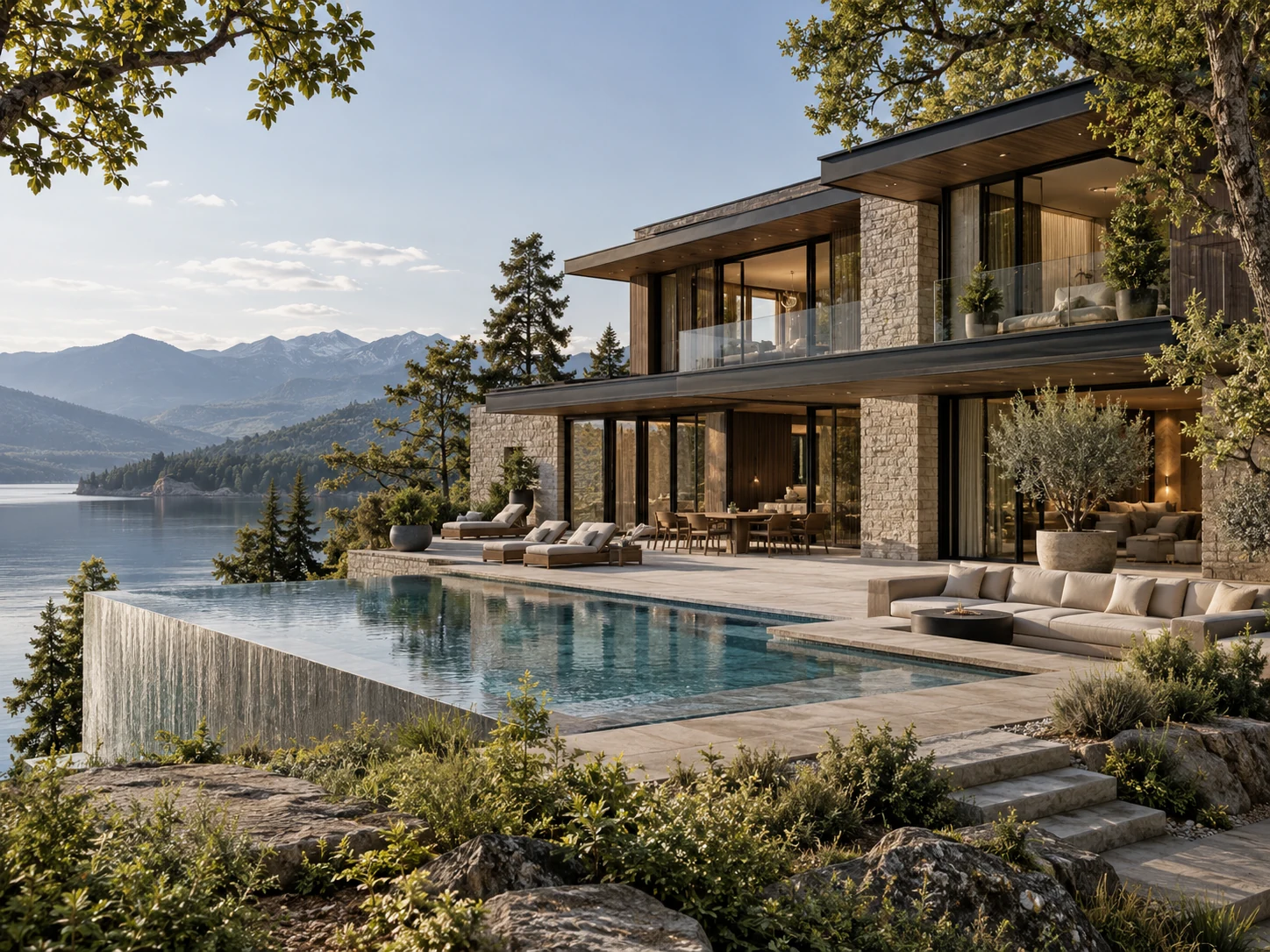
Landscape elements help explain how an exterior space may be used. They can also change the apparent scale and privacy of a property, so the brief should identify what is proposed and at what stage.
Separate existing and proposed elements
Mark retained trees, new planting, paving and outdoor furniture on the site plan. State whether plant sizes represent installation or an illustrative future condition. Do not assume that mature vegetation in a reference image will exist on completion.
Keep the building readable
Review whether trees or furniture hide entrances, windows or important design features. Choose planting that supports the agreed concept rather than filling every empty part of the image. If species are not selected, label them as illustrative and seek appropriate landscape advice separately.
Check the outdoor journey
Show how a person reaches the entrance or terrace, and compare the image with the planned surfaces and level changes. Before publishing, confirm that pools, seating areas and boundaries match the actual proposal. Use the render to explain the landscape intention without turning an optional feature into an implied commitment.